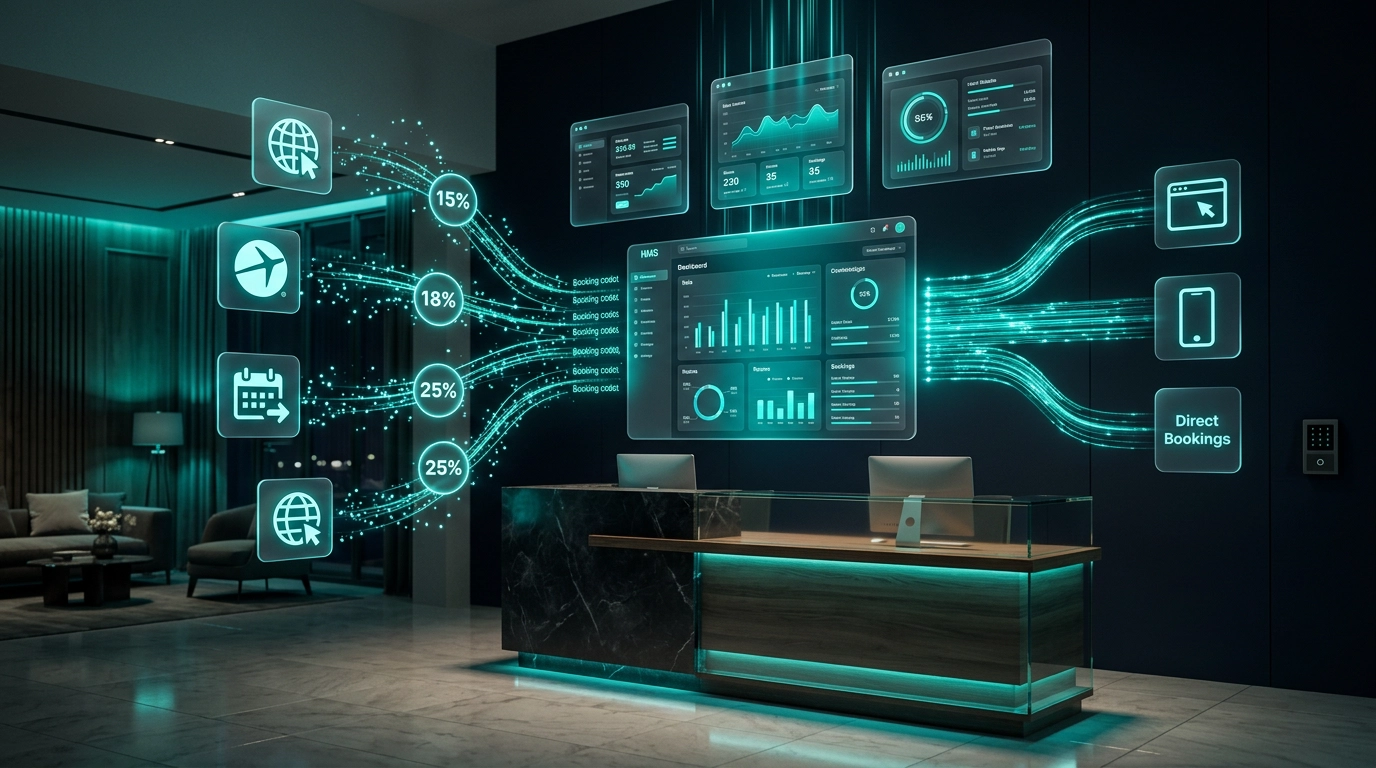
In the previous episode, we discussed how being on an OTA still doesn't mean you control your distribution.
Now it's time to answer a different question: How much does each OTA booking actually cost you, and why does having your own direct sales channel matter?
The Number That Explains Everything
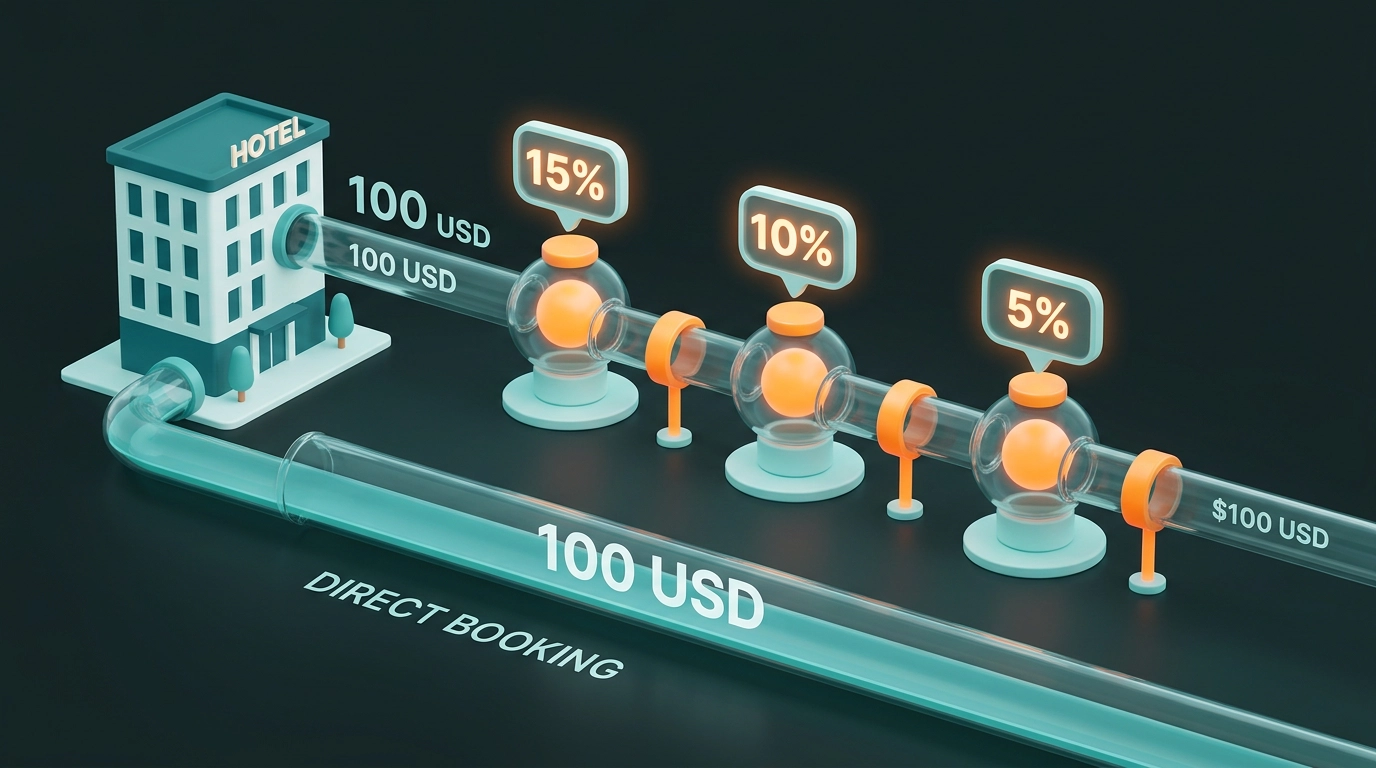
Imagine a $100 booking. The base OTA commission averages 15–18%. Add a Genius/Loyalty program, a Visibility Booster, Preferred Partner status, or other discounts, and the hotel may end up with only around $76.5 — meaning nearly 23.5% of the booking's value gets lost across various costs. And that's just one of the most common scenarios.
Where Does This Cost Come From?
1 — Base OTA Commission (15–18%)
On every completed booking, the platform takes its commission. This is before any additional programs.
2 — Loyalty / Genius Programs (+10–20%)
Many OTAs run loyalty programs. In most cases, the hotel itself funds the discount. The goal is more visibility, but that doesn't always mean more profit.
3 — Visibility Programs (+3–8%)
In exchange for extra visibility, you can end up paying an additional commission. If these tools stay active permanently, you often pay extra even during periods when the rooms would have sold anyway.
4 — Rate Parity: Can You Really Sell Cheaper on Your Own Site?
One of the most important issues in OTA contracts is exactly Rate Parity. For years, most OTAs required hotels not to offer a lower price on their own website than on the OTA.
In December 2024, as a result of the Digital Markets Act, Booking.com lifted this restriction in EU/EEA countries. Georgia is not part of that space. So Georgian hotels are still bound by whatever their specific OTA contract states. Before listing a different price on your own Booking Engine, always double-check your contract terms.
Why Doesn't This Mean Giving Up on OTAs?
Here's where it gets interesting. Cornell University's well-known Billboard Effect study found that hotels listed on OTAs also get more direct bookings on their own website. According to the research:
- ✓ Direct bookings increase by 9–26%;
- ✓ About 75% of direct-booking guests first browse the hotel on an OTA.
In other words, the OTA often works as a showcase. The sale itself ultimately closes on your website — if you have that option available.
Conclusion
The problem isn't the OTA. The problem is when the OTA becomes your only sales channel. Modern hotels use OTAs to attract new guests, and their own website to grow direct bookings. Both channels work together.
💡 HIT Hub Insight
Georgian hotels most often only count the base 15% commission. In reality, Genius, Visibility programs, various discounts, and additional costs frequently add up to more than 20% in total.
That's exactly why it matters to analyze not just the number of bookings coming from OTAs, but their real cost as well.
Before deciding which channel to invest more resources in, calculate the full cost of each OTA-sourced booking and compare it to the cost of direct sales.